Washington, D.C., is the capital of the United States and a great destination for travelers who enjoy history, museums, monuments, parks, and beautiful city views. The city has many famous landmarks, but it also has peaceful neighborhoods, gardens, restaurants, and outdoor spaces.
One of the best things about Washington, D.C. is that many major attractions are free to visit. The National Mall is home to famous monuments, memorials, and several museums, making it a great place to start your trip.
If you are planning your first visit, here are some of the best things to do in Washington, D.C.
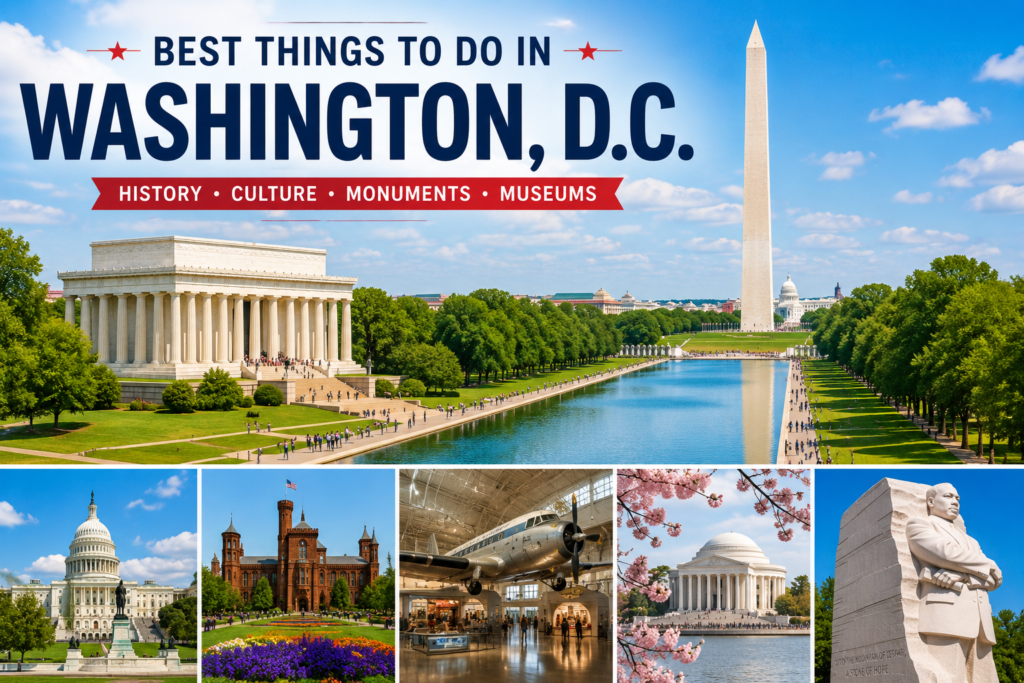
1. Explore the National Mall
The National Mall should be at the top of your Washington, D.C. itinerary.
This large open area connects many of the city’s most famous monuments and memorials. You can walk along the paths while seeing the Washington Monument, Lincoln Memorial, World War II Memorial, and other important sites.
The National Mall also provides access to several Smithsonian museums, making it possible to combine outdoor sightseeing with museum visits in the same day.
Wear comfortable shoes because the area is larger than it may look on a map.
2. See the Lincoln Memorial
The Lincoln Memorial is one of the most recognizable landmarks in Washington, D.C.
The memorial honors Abraham Lincoln, the 16th president of the United States. Inside, visitors can see the famous large statue of Lincoln overlooking the Reflecting Pool and Washington Monument.
The memorial is also connected with important moments in American history, including Martin Luther King Jr.’s famous 1963 speech.
Try visiting early in the morning or around sunset for a quieter atmosphere and beautiful views.
3. Visit the Washington Monument
The Washington Monument is another major symbol of the capital.
The tall marble monument was built to honor George Washington, the first president of the United States. It stands prominently on the National Mall and can be seen from many parts of the city.
Visitors can enjoy views around the monument and, when access is available, explore the monument itself. Check current visitor information before planning an interior visit because entry arrangements can change.
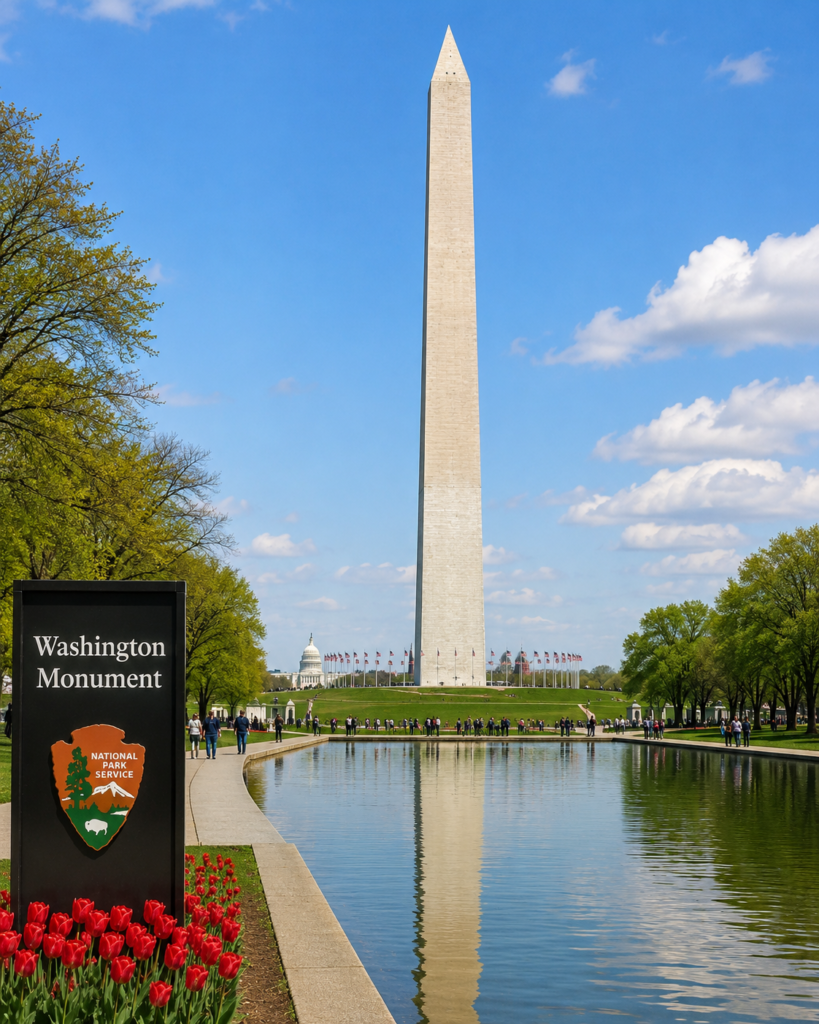
4. Visit the Smithsonian Museums
Washington, D.C. is an excellent destination for museum lovers.
Several Smithsonian museums are located around the National Mall, and many offer free admission. Depending on your interests, you can learn about American history, natural science, aviation, art, culture, and more.
Popular choices include the National Museum of Natural History, National Air and Space Museum, National Museum of American History, and National Museum of African American History and Culture.
You do not need to visit every museum. Choose one or two that match your interests so you have enough time to enjoy them.
5. See the U.S. Capitol
The U.S. Capitol is one of the most important buildings in Washington, D.C.
It is where the United States Congress meets and is an impressive example of American architecture. The Capitol sits at the eastern end of the National Mall.
You can view the building from the outside and explore the surrounding Capitol Hill area. If you want to tour the Capitol, check official visitor information and reservation requirements before your trip.
6. Visit the National Gallery of Art
Art lovers should add the National Gallery of Art to their Washington, D.C. itinerary.
The museum has extensive collections covering different periods and styles of art. It also includes a sculpture garden where visitors can enjoy artwork outdoors.
The National Gallery of Art is located near the National Mall, so it can easily be combined with other attractions in the area.
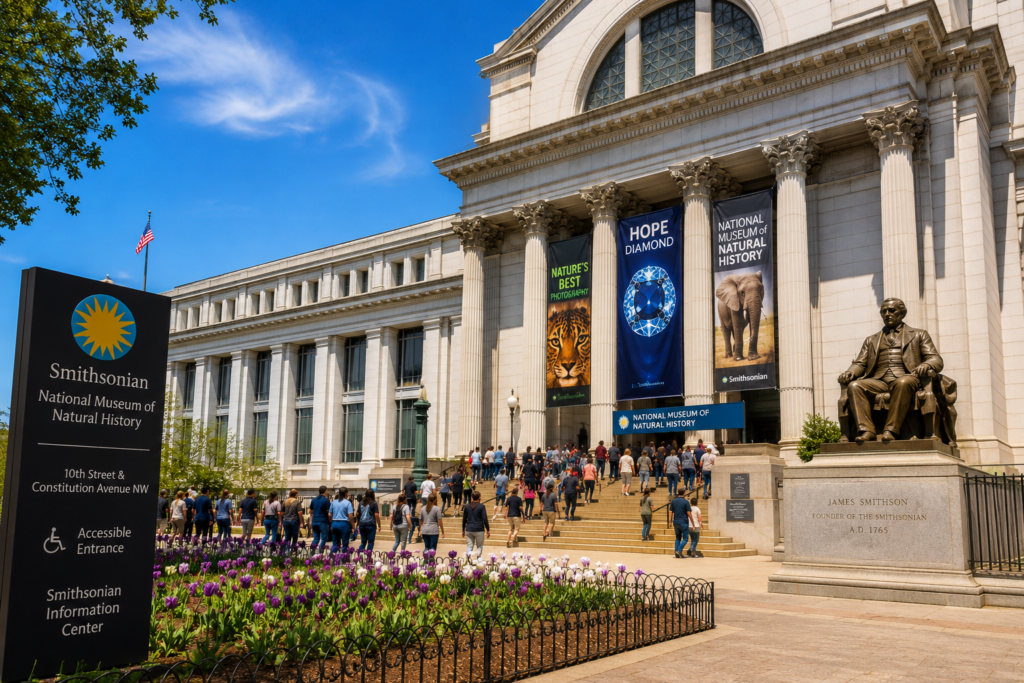
7. Visit the National Museum of Natural History
The National Museum of Natural History is a fun choice for visitors of different ages.
The museum features exhibits covering animals, fossils, minerals, human history, and the natural world. It is also home to famous objects such as the Hope Diamond and dinosaur fossils.
Because there is a lot to see, give yourself several hours if you want to explore the museum without rushing.
8. Walk Around the Tidal Basin
The Tidal Basin is one of the most scenic areas in Washington, D.C.
The waterfront area is surrounded by several famous memorials, including the Thomas Jefferson Memorial, Franklin Delano Roosevelt Memorial, and Martin Luther King Jr. Memorial.
Spring is especially popular because of the cherry blossoms around the Tidal Basin. However, the area can be enjoyable during other seasons too.
A walk around the water is a relaxing way to take a break from busy museum visits.
9. Visit the National Archives
History lovers should not miss the National Archives.
The National Archives Building is home to important founding documents of the United States, including the Declaration of Independence, U.S. Constitution, and Bill of Rights.
Seeing these original documents can make your Washington trip more meaningful because you can connect places in the city with important moments in American history.
10. Explore Rock Creek Park
Washington, D.C. is not only about museums and monuments.
Rock Creek Park provides a chance to enjoy nature without leaving the city. The large park includes wooded areas, trails, and outdoor spaces where visitors can walk, bike, and explore.
It is a good option if you want to spend a few hours away from the busy National Mall. The National Park Service also highlights outdoor activities in and around Washington, D.C.
11. Visit the Thomas Jefferson Memorial
The Thomas Jefferson Memorial sits beside the Tidal Basin and is one of Washington’s most recognizable memorials.
Its large columns and domed design make it especially impressive from the outside. Inside, visitors can see a statue of Jefferson and read words connected to his ideas and writings.
The memorial is particularly beautiful during cherry blossom season, when the surrounding trees are in bloom.
12. Explore Washington, D.C. Neighborhoods
After visiting the major landmarks, take some time to explore Washington, D.C.’s neighborhoods.
Areas such as Georgetown, Dupont Circle, and Adams Morgan offer restaurants, shops, historic streets, and a different side of the city.
Exploring neighborhoods can help you experience Washington beyond the famous monuments and museums.
Best Time to Visit Washington, D.C.
Washington, D.C. can be visited throughout the year, but spring and fall are popular choices.
Spring is especially famous for cherry blossoms around the Tidal Basin. Fall brings comfortable weather and colorful trees, making it a pleasant season for walking.
Summer can be warm and busy, while winter is generally quieter. Before your trip, check the weather and attraction schedules so you can plan your days comfortably.
How Many Days Do You Need in Washington, D.C.?
For a first visit, three days can be a good starting point.
You can spend one day exploring the National Mall and monuments, another day visiting Smithsonian museums, and another day exploring places such as Georgetown, the Tidal Basin, or Rock Creek Park.
If you have four or five days, you can explore the city at a slower pace and visit more museums and neighborhoods.
Simple Tips for Visiting Washington, D.C.
Keep these tips in mind before your trip:
- Wear comfortable shoes.
- Plan your museum visits before arriving.
- Check whether attractions require timed entry.
- Use public transportation when convenient.
- Carry water during warm weather.
- Start early if you want fewer crowds.
- Give yourself enough time between attractions.
- Check current opening hours before visiting.
- Take breaks during long walking days.
- Explore neighborhoods outside the National Mall.